

Something happens the first time you slow down and write a full page by hand. The noise of the day fades. Your thoughts become words, one deliberate stroke at a time. The pen moves across the page and you realize — with a small, quiet surprise — that you have been missing this.
For many adults over 50, rediscovering handwriting through a fountain pen is not just a return to something familiar. It is a genuine revelation. The experience is different from what you remember. It is slower, more intentional, and surprisingly calming. And the pen itself — the weight of it, the way the nib responds to your hand, the ink flowing in beautiful color — makes the entire ritual feel like a small gift you give yourself each day.
Why Handwriting Is Worth Revisiting
The science behind handwriting benefits has grown considerably in recent years. Research published in journals and reviewed by institutions like the American Psychological Association confirms what many people intuitively sense: writing by hand engages the brain differently than typing, and that difference matters.
When you write by hand, multiple areas of the brain activate simultaneously — the motor cortex, sensory regions, and language centers all work together. This integrated neural activity improves memory retention, enhances focus, and strengthens cognitive processing. Studies have shown that people who take handwritten notes remember content more deeply than those who type, even when the typists record more words.
For adults navigating the challenges that can come with aging — memory, focus, fine motor coordination — handwriting offers a gentle, pleasurable way to keep the mind active and engaged.
How Fountain Pens Amplify the Experience
Any pen can deliver the cognitive benefits of handwriting. But fountain pens deliver something more: they make the act of writing genuinely enjoyable, which is what turns a brief habit into a lasting daily practice.
Less Effort, More Comfort
Ballpoint pens require you to press the pen firmly into the paper to force the thick oil-based ink onto the page. Over time, this pressure causes hand fatigue and cramping — particularly for those with arthritis or reduced hand strength. Fountain pens work entirely differently. The ink flows freely through gravity and capillary action, requiring almost no downward pressure. You rest the pen on the page, guide it, and the ink follows. Long writing sessions become genuinely comfortable.
An Invitation to Slow Down
There is a natural rhythm to writing with a fountain pen that resists hurrying. The nib, the paper, and the ink exist in a subtle conversation that asks you to be present. Many experienced writers describe fountain pen writing as meditative — not in an abstract sense, but in the practical sense that it quiets internal noise and produces a state of focused calm.
Personal Expression Through Ink and Nib
One of the unique joys of fountain pen writing is how personal it becomes. You choose an ink color that reflects your mood or the occasion — a warm amber for autumn letters, a deep blue-black for journaling, a soft green for lighter days. You choose a nib that matches your writing style. The result is writing that looks and feels like yours in a way that typed text never can.
Where to Begin: Simple Daily Practices
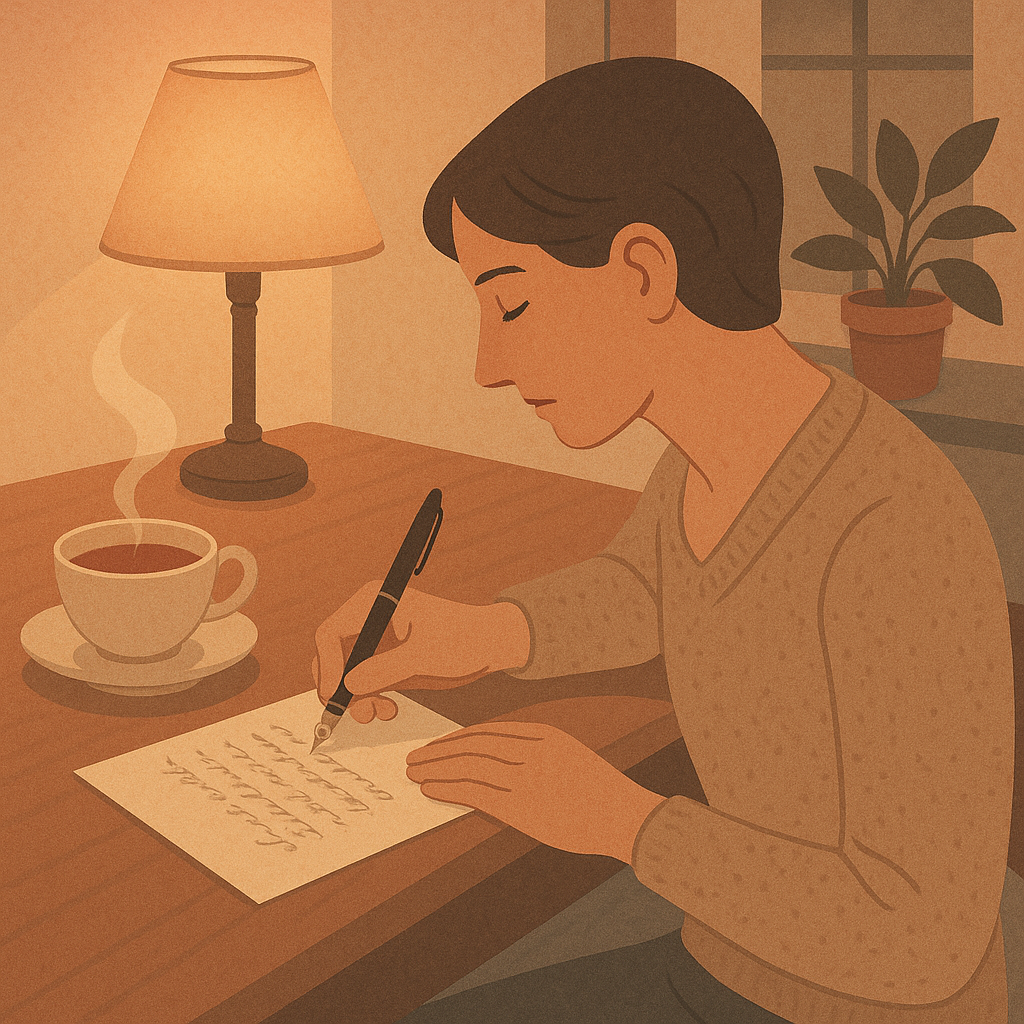
You don’t need a structured program or a dedicated block of time to enjoy the benefits of handwriting. Small daily practices are enough to make a meaningful difference.
The Morning Page
Many fountain pen enthusiasts keep a notebook beside their morning coffee. Before the day begins, they write one page — observations, plans, memories, gratitude. There is no right topic and no wrong approach. The act of writing itself is the goal. Over weeks and months, these pages become a remarkable record of how your mind moves through time.
Handwritten Correspondence
Writing letters by hand to friends and family creates something a text message or email cannot: a physical object imbued with thought and care. The recipient holds the paper you touched. They read words formed by your hand. For adults over 50 who grew up writing letters, this practice reconnects them to a form of communication that felt warmer and more personal than anything digital.
- Start small: A postcard or a short note is more than enough to begin.
- Choose quality paper: The right stationery makes the writing experience more pleasurable and the finished letter more beautiful.
- Let it be imperfect: Handwriting is not supposed to look like a font. Its natural variation is what makes it human and alive.
Pros and Cons of Returning to Handwriting
Cognitive and memory benefits
Handwriting engages multiple brain regions simultaneously, supporting memory retention and mental sharpness.
Stress reduction and mindfulness
The deliberate pace of fountain pen writing naturally calms the mind and creates a state of focused presence.
Physical comfort
Low-pressure fountain pen writing reduces hand fatigue and is gentler on joints than ballpoint pens.
Personal expression and joy
The combination of nib, ink color, and paper makes every page uniquely yours — writing becomes a form of quiet creative expression.
Slower than typing
Handwriting cannot match the speed of a keyboard for capturing information quickly — but for reflective writing, this slowness is actually the point.
Requires fountain pen-friendly paper
Standard printer paper and cheap notebooks do not work well with fountain pens. A small investment in quality paper is necessary for the best experience.
Frequently Asked Questions
Will my handwriting improve when I switch to a fountain pen?
Many people find their handwriting naturally improves. The slower pace and the feel of the nib encourage more deliberate, controlled strokes. Handwriting that may have become hurried and cramped with a ballpoint often becomes more open and legible with a fountain pen.
How much time do I need to see benefits?
Even 10 to 15 minutes of handwriting daily produces measurable stress reduction and improved focus. The benefits compound with consistency — most people notice a difference within two or three weeks of daily practice.
Is cursive better than print for fountain pens?
Neither is objectively better — both work beautifully. Cursive allows for a more fluid, uninterrupted stroke that many fountain pen users prefer. Print gives more control over individual letterforms. Write in whichever style feels natural to you.
What if my handwriting has gotten messy over the years?
This is completely normal after decades of relying on keyboards. A few weeks of regular practice with a fountain pen will bring back muscle memory and refine your natural style. There is no need for formal practice exercises — just write.
Final Thoughts
Rediscovering handwriting with a fountain pen is one of the most accessible and genuinely rewarding things you can do for your mind and daily life. It asks very little — a pen, some paper, a few quiet minutes — and offers a great deal in return: calm, focus, creativity, and the quiet satisfaction of making something beautiful with your own hand.
If you have been curious about starting, consider this your encouragement. You do not need to be an artist or a calligrapher. You simply need to pick up the pen and begin. The joy of it reveals itself in the writing.