

When I first started my fountain pen journey fifteen years ago, I remember staring at my Lamy Safari and wondering how such a simple-looking instrument could create such beautiful writing. Like many beginners, I was intimidated by terms like “feed,” “converter,” and “tines” that enthusiasts casually mentioned.
Understanding fountain pen anatomy isn’t just about impressing fellow pen lovers with technical knowledge — it’s about becoming a confident user who can troubleshoot problems, perform basic maintenance, and make informed purchasing decisions. When you know how each part functions, you transform from someone who simply writes with a fountain pen to someone who truly understands their writing instrument.
Let me take you on a journey through your fountain pen’s anatomy, explaining each component in simple terms and showing you why this knowledge matters for your daily writing experience.
The External Components You Can See
Starting from the outside, every fountain pen consists of several key external parts that you interact with directly. These visible components not only define the pen’s appearance but also its functionality and comfort.
The cap is far more than a protective cover — it’s your pen’s lifeline. A well-designed cap creates an airtight seal that prevents your ink from drying out in the nib and feed. Some caps post securely on the back of the pen during writing, while others are designed to remain separate. The posting preference is largely personal, but it significantly affects the pen’s balance and length during use.
The barrel houses your pen’s ink supply and provides the primary grip area during writing. In cartridge/converter pens, the barrel unscrews to reveal the internal mechanism. Piston-filling pens integrate the filling mechanism directly into the barrel design.
The section is where your fingers naturally rest during writing, making it crucial for comfort. This tapered area connects the nib assembly to the barrel and often contains the threads that secure the cap. Quality sections have smooth, comfortable contours without sharp edges or uncomfortable steps that could cause fatigue during extended writing sessions.
The Heart of Your Fountain Pen: Nib and Feed
The nib is undoubtedly your fountain pen’s most critical component — the part that touches paper and creates your unique writing experience. Understanding nib anatomy helps you choose the right pen and troubleshoot writing issues.
Modern fountain pen nibs consist of several key features:
- The tip: Where ink meets paper, shaped and polished to create smooth writing
- The tines: Two separate halves of the nib that flex slightly during writing
- The slit: Thin channel between tines that controls ink flow to the tip
- The breather hole: Small opening where tines meet, helps regulate air and ink flow
- The shoulders: Curved areas on either side of the slit that affect line variation
Behind the nib sits the feed — a precisely engineered component that most users never see but absolutely depends on. The feed performs the miraculous task of delivering exactly the right amount of ink to your nib through capillary action. It features tiny channels and fins that store ink and regulate its flow based on your writing speed and pressure.
When people talk about fountain pens “understanding” how you write, they’re really describing the complex interaction between nib and feed working in perfect harmony.
Internal Ink Delivery Systems
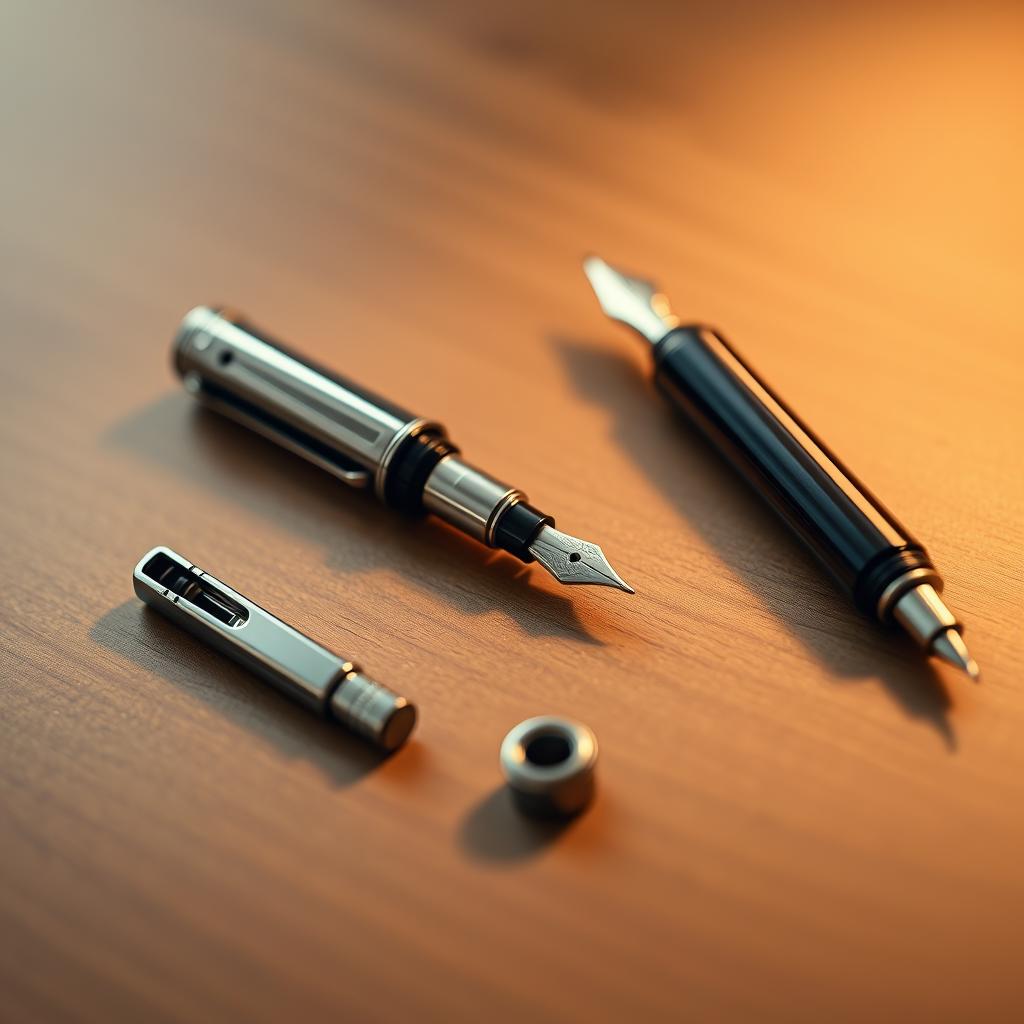
Your fountain pen needs a reliable way to store and deliver ink to the nib assembly. Modern pens use several different systems, each with distinct advantages for different users and situations.
Your fountain pen needs a reliable way to store and deliver ink to the nib assembly. Modern pens use several different systems, each with distinct advantages for different users and situations.
Cartridge Systems
Cartridges are sealed plastic containers filled with fountain pen ink. They’re incredibly convenient — simply insert a fresh cartridge into your pen, and you’re ready to write. Most major manufacturers produce cartridges in standard sizes, though some brands like Lamy and Parker use proprietary formats.
The cartridge connects to a small plastic tube called the cartridge piercer that punctures the cartridge seal and allows ink to flow into the feed system.
Converter Systems
A converter is a reusable cartridge that you fill from bottled ink. It typically uses either a piston mechanism or squeeze-fill system to draw ink into its chamber. Converters offer access to the vast world of bottled fountain pen inks while maintaining the convenience of a removable ink supply.
Built-In Filling Systems
Some fountain pens integrate the ink storage directly into the pen body. Piston fillers use a screw mechanism to move a piston up and down inside the barrel, creating suction that draws ink directly from a bottle. These systems typically hold more ink than cartridges or converters and are favored by users who write extensively.
The Engineering Behind Smooth Writing
What makes a fountain pen write smoothly isn’t magic — it’s precisely engineered capillary action working through several interconnected systems. Understanding this engineering helps you appreciate why quality fountain pens perform so differently from cheaper alternatives.
The ink flow system relies on three key principles:
- Capillary action: Ink moves through tiny channels without external pressure
- Air replacement: As ink flows out, air must enter to prevent vacuum
- Surface tension: Ink clings to the feed and nib surfaces in controlled amounts
Quality control in manufacturing these components requires incredible precision — we’re talking about tolerances measured in fractions of millimeters. This is why handmade or carefully inspected nibs often perform noticeably better than mass-produced alternatives.
Troubleshooting Through Anatomical Understanding
Knowing your fountain pen’s anatomy transforms you from a frustrated user into a confident problem-solver. Most common issues relate to specific components, and understanding the connection helps you apply the right solution.
Hard starts or skipping
Usually indicates dried ink in the feed or misaligned nib tines.
Too much ink flow
Often caused by overly wet feed or damaged breather hole.
Scratchy writing
Typically tine misalignment or rough nib tip requiring polishing.
Clean the feed
Flush with clean water to remove dried ink blockages.
Check alignment
Examine tines under magnification for proper alignment.
Test ink flow
Try different paper or ink to isolate the issue.
Maintenance and Care by Component
Different parts of your fountain pen require different maintenance approaches. Understanding each component’s role helps you provide appropriate care without overdoing it.
Nib and feed maintenance: These components benefit from regular cleaning with clean water, especially when changing inks or if the pen hasn’t been used for several weeks. Remove the cartridge or converter, and flush clean water through the nib assembly until it runs clear.
Threading and connections: Occasionally clean the threads where the cap meets the section and where the barrel connects. A soft cloth dampened with water removes ink residue and ensures smooth operation.
Internal mechanisms: Converters and piston mechanisms need periodic cleaning and occasional lubrication of moving parts. However, this should be done sparingly and only with appropriate materials.
Choosing Pens Based on Component Quality
Understanding fountain pen anatomy helps you make informed purchasing decisions by evaluating component quality rather than relying solely on brand names or appearance.
When examining potential purchases, pay attention to:
- Nib quality: Look for smooth tine alignment and consistent gap width
- Feed design: Quality feeds have precise channel work and proper fit
- Threading quality: Smooth, precise threads indicate careful manufacturing
- Overall fit and finish: Components should align properly with no visible gaps
Remember that expensive doesn’t always mean better — some moderately priced pens have excellent component quality, while some luxury pens prioritize materials over engineering precision.
Frequently Asked Questions
Can I replace individual fountain pen parts?
Yes, many components like nibs, feeds, and converters can be replaced. However, compatibility varies by manufacturer, so check with the pen maker for available replacement parts.
Why do some fountain pens have gold nibs?
Gold nibs resist corrosion better than steel and can be made softer for flex writing. However, modern steel nibs often perform just as well for regular writing needs.
What’s the difference between different feed materials?
Most modern feeds use plastic (ebonite) which works excellently. Some vintage pens used hard rubber feeds. The material matters less than the precise engineering of the ink channels.
How often should I clean my fountain pen’s internal parts?
Clean the nib and feed every 4-6 weeks with regular use, or whenever changing ink colors. Deep cleaning of internal mechanisms should be done 2-3 times per year.
Building Confidence Through Understanding
Learning fountain pen anatomy might seem overwhelming initially, but this knowledge becomes your foundation for years of confident fountain pen use. You don’t need to become a pen repair expert — simply understanding how the parts work together helps you use, maintain, and troubleshoot your writing instruments effectively.
Think of it like understanding your car’s basic systems. You don’t need to be a mechanic, but knowing the difference between the engine, transmission, and brakes helps you communicate problems, perform basic maintenance, and make informed decisions about repairs or replacements.
The beautiful complexity of fountain pen engineering becomes less mysterious and more wonderful when you understand the precise relationships between each component. Every smooth line you write represents dozens of engineered surfaces working in perfect harmony — from the microscopic channels in your feed to the precisely ground contact point of your nib.
As you continue your fountain pen journey, this anatomical knowledge will serve you well. You’ll troubleshoot problems with confidence, appreciate the craftsmanship in quality pens, and understand exactly why certain combinations of nib, feed, and ink create such magical writing experiences.
Take time to examine your own fountain pens with this new understanding. Notice how the components connect, observe the precision required for smooth operation, and appreciate the engineering that makes effortless writing possible with just the weight of the pen.