

There’s something deeply satisfying about filling your fountain pen with an ink color that has graced paper for over a century. Vintage-inspired fountain pen ink colors offer a beautiful connection to the past, bringing the elegance and nostalgia of classic writing into our modern world. Whether you’re penning a letter, journaling, or simply enjoying the meditative practice of handwriting, these time-honored hues add a special richness to every word.
For those of us who cherish the tactile pleasure of fountain pen writing, choosing the right ink color is like selecting the perfect vintage wine—each hue tells a story and evokes a particular mood. Traditional ink colors weren’t just functional; they were crafted to reflect the dignity and permanence of the written word.
What Makes an Ink Color “Vintage-Inspired”?
Vintage-inspired ink colors draw their inspiration from the classic fountain pen inks that were popular from the late 1800s through the 1960s. These weren’t the bold, saturated colors we see today, but rather sophisticated, muted tones that reflected the formal nature of business correspondence and personal letter writing of that era.
Key Characteristics of Traditional Inks
The hallmarks of these traditional fountain pen ink colors include:
- Subtle sophistication: Colors were refined rather than bright or flashy
- Professional appearance: Suitable for business documents and formal correspondence
- Excellent legibility: Designed to be read easily under various lighting conditions
- Timeless appeal: Colors that never go out of style
These vintage hues were formulated when fountain pens were the primary writing instrument for everyone from bank presidents to school children. The colors needed to be both practical and pleasing, creating that perfect balance between function and aesthetic appeal.
Classic Blue Inks: The Foundation of Tradition
Blue ink has been the cornerstone of fountain pen writing for good reason. The most beloved vintage blue inks include deep navy blues, royal blues, and the famous “blue-black” combinations that provided excellent contrast without being harsh on the eyes.
Most Trusted Vintage Blue Inks
🏆 Waterman Serenity Blue
Perhaps the most famous vintage-safe blue, this ink has maintained its formulation for decades. It’s the perfect balance of professionalism and warmth, making it ideal for both business correspondence and personal writing.
⭐ Parker Quink Blue
A classic that has graced countless documents since the 1930s. This reliable blue offers excellent flow characteristics and a timeless appearance that looks as appropriate today as it did ninety years ago.
✨ Sheaffer Blue
Known for its slightly purple undertones, this blue brings a touch of elegance to everyday writing while maintaining the reliability vintage pen users demand.
The Elegance of Heritage Browns and Blacks
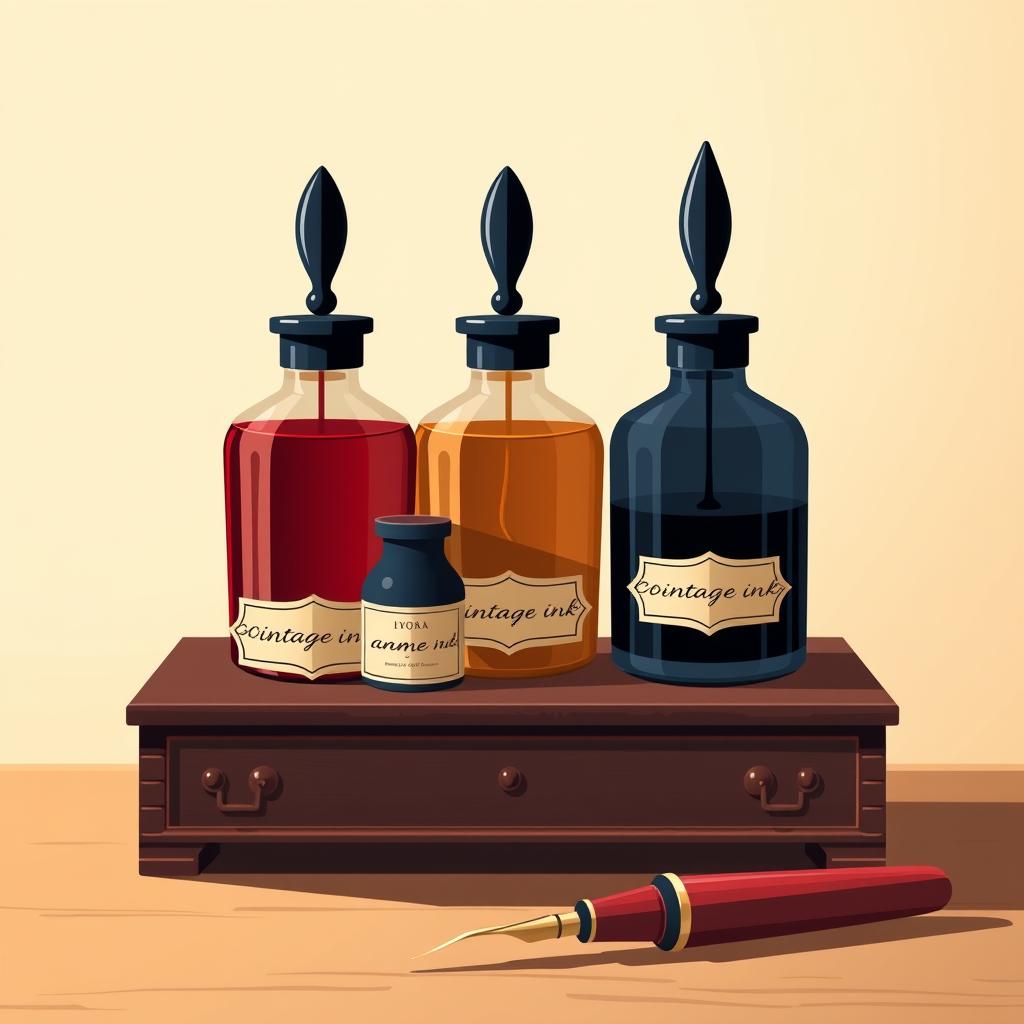
While blue dominated the vintage ink landscape, browns and blacks held their own special place in the fountain pen world. These colors evoke the warmth of old libraries, the sophistication of leather-bound journals, and the permanence of important documents.
Traditional black inks weren’t the pure, intense blacks we see today. Instead, they often had subtle brown or blue undertones that gave them character and warmth. These “iron gall” inspired colors created beautiful aging characteristics, where the ink would develop a rich patina over time.
Heritage brown inks, meanwhile, offered a sophisticated alternative to black for those who wanted something distinctive yet professional. Colors like sepia, burnt umber, and chestnut brown created documents with an instant sense of history and gravitas.
Green and Red: The Accent Colors of Yesteryear
Vintage green and red inks served specific purposes in the fountain pen world. Green was often used for accounting and bookkeeping (hence “green ink” in financial contexts), while red was reserved for corrections, signatures, and special notations.
Understanding Traditional Color Applications
Traditional greens tended toward forest and hunter green shades rather than the bright emerald or lime colors popular today. These subdued greens complemented the serious nature of business documents while still providing clear distinction when needed.
Similarly, vintage reds were deep burgundies, crimsons, and wine colors rather than bright fire engine reds. These sophisticated reds maintained readability while adding just the right amount of authority to important annotations.
Why Choose Vintage-Inspired Colors Today?
Timeless Appeal
These colors never go out of style and look appropriate in any setting.
Professional Appearance
Perfect for business documents, formal correspondence, and important signing.
Gentle on Eyes
Subtle tones are easier to read for extended periods compared to bright modern colors.
Vintage Pen Safe
Most classic formulations are safer for delicate vintage fountain pen mechanisms.
Limited Variety
Fewer color options compared to modern ink ranges with hundreds of hues.
Less Vibrant
Subdued tones may seem dull to those accustomed to bright modern inks.
Potential for Similarity
Many vintage blues and blacks can look quite similar to the untrained eye.
Building Your Vintage Color Palette
Starting your vintage-inspired ink collection doesn’t require a huge investment. Begin with one excellent example from each major color family, then expand based on your preferences and writing needs.
Essential Colors for Beginners
A well-rounded vintage palette might include:
- One classic blue: Your everyday writing workhorse
- One traditional black: For formal documents and signatures
- One heritage brown: For journaling and personal correspondence
- One subdued green or red: For special purposes and variety
Remember, the beauty of vintage-inspired inks lies not in having dozens of colors, but in fully appreciating the nuanced character of each carefully chosen hue. Take time to really get to know each ink—how it flows, how it dries, how it ages on different papers.
Frequently Asked Questions
Are vintage-inspired inks safe for all fountain pens?
Most vintage-inspired inks from reputable manufacturers are safe for modern fountain pens. However, if you own actual vintage pens, stick to proven brands like Waterman, Parker, and Sheaffer that have maintained their gentle formulations.
Do vintage-inspired colors cost more than modern inks?
Not necessarily. Many classic formulations are quite affordable because they’ve been in production for decades. The real cost is in taking time to appreciate their subtle character rather than chasing the latest trendy colors.
Can I mix vintage-inspired inks with modern fountain pen inks?
While technically possible, it’s better to clean your pen thoroughly between different ink types. Each ink has its own chemistry, and mixing can sometimes cause unexpected reactions or clogging.
How do I choose my first vintage-inspired ink color?
Start with a classic blue like Waterman Serenity Blue or Parker Quink Blue. These colors are versatile, widely available, and give you a true sense of what vintage fountain pen writing was all about.
Final Thoughts
Choosing vintage-inspired ink colors is about more than just aesthetics—it’s about connecting with the rich tradition of fountain pen writing. These time-tested hues remind us that there’s beauty in simplicity, elegance in restraint, and profound satisfaction in choosing quality over quantity.
Next time you fill your fountain pen, consider reaching for one of these classic colors. You might just find that there’s something special about writing with an ink color that has been bringing words to life for over a century. The connection to that long tradition of thoughtful, deliberate writing can make every word feel a little more meaningful.