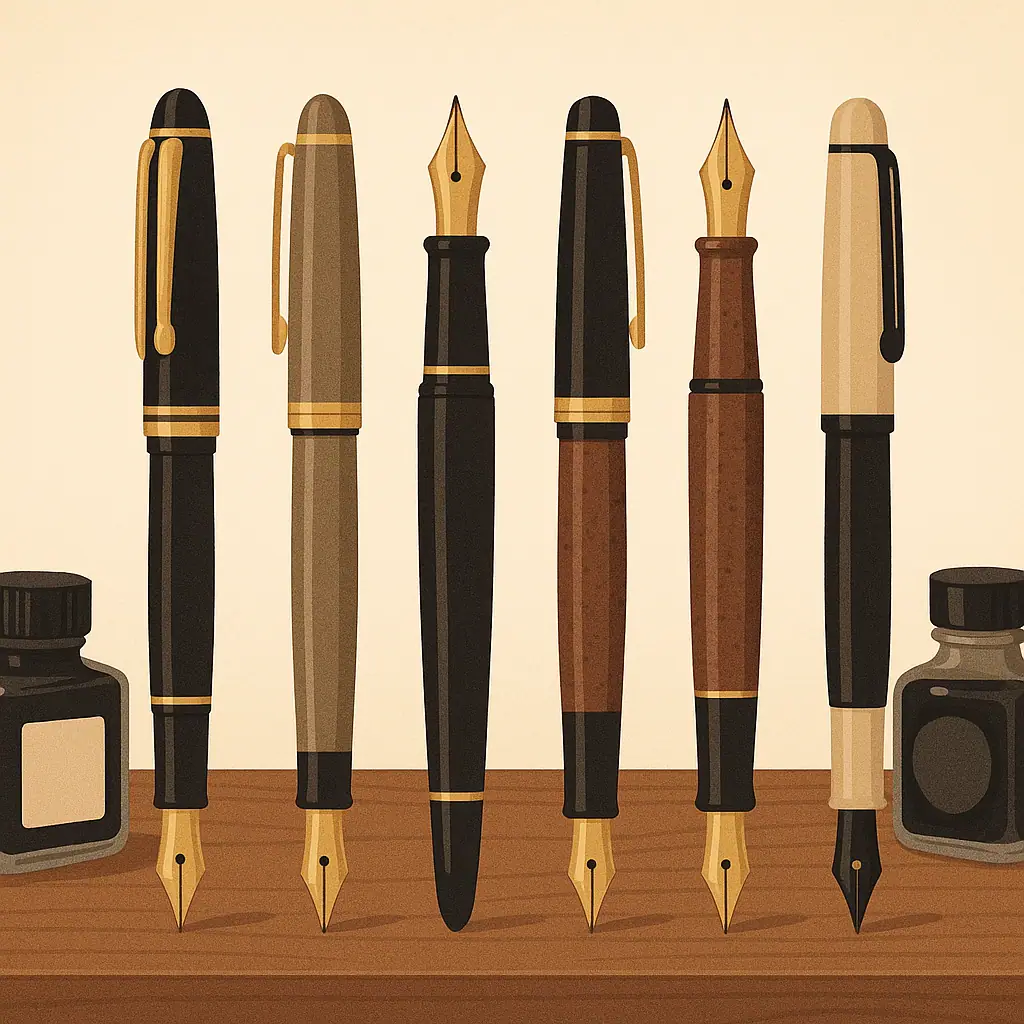
Choosing your first fountain pen can feel overwhelming with so many options available. After reviewing dozens of beginner-friendly models, I've narrowed the field to five exceptional pens that consistently deliver quality, reliability, and value.
Each pen on this list offers something unique — whether you prioritize affordability, design, or long-term durability. Let me walk you through what makes each one special and help you find the perfect match for your writing journey.
What Makes a Great Beginner Fountain Pen?
Before we dive into specific models, let's establish what separates exceptional beginner pens from the rest of the pack.
- Smooth nib: Writes without scratching or skipping on quality paper.
- Consistent ink flow: No hard starts or flooding between uses.
- Comfortable grip: Balanced weight distribution for extended writing sessions.
- Easy maintenance: Simple to clean and refill without special tools.
- Forgiving design: Tolerates beginner handling and varied grips.
The pens below excel in all these areas while offering distinct advantages depending on your priorities and budget.
The Top 5 Beginner Fountain Pens Compared
🏆 Pilot Metropolitan — Best Overall Value ($15-20)
The Metropolitan combines exceptional build quality with an affordable price point that makes it accessible to everyone. The brass body gives it satisfying weight without fatigue, and the medium nib writes smoothly right out of the box. Best for: Budget-conscious beginners who want a pen that feels premium.
⭐ Lamy Safari — Most Iconic Design ($25-30)
The Safari's distinctive triangular grip guides your fingers into proper fountain pen position naturally. Its robust ABS plastic construction survives drops and daily carry abuse that would damage more delicate pens. The snap-cap design means one-handed operation when inspiration strikes. Best for: Writers who appreciate ergonomic design and durable construction.
✨ TWSBI Eco — Best Ink Capacity ($32-35)
The Eco's clear demonstrator body lets you watch ink flow from reservoir to nib — both practical and mesmerizing. Its piston-filling mechanism holds significantly more ink than cartridge pens, meaning fewer refills during long writing sessions. The precision-machined components feel like a much more expensive pen. Best for: Writers who love bottled ink and want maximum capacity.
💎 Platinum Preppy — Best Budget Option ($5-7)
Don't let the price fool you — the Preppy writes as smoothly as pens costing ten times more. The slip-cap design and lightweight body make it perfect for testing different nib sizes without financial commitment. It's also ideal for experimenting with various ink colors since you can dedicate one pen per color. Best for: Complete beginners who want to try fountain pens risk-free.
🎯 Parker Jotter — Most Professional Look ($20-25)
The Jotter brings classic business aesthetic to the beginner fountain pen category. Its slim profile and understated design look appropriate in any professional setting, while the reliable nib performs consistently whether you're signing documents or taking meeting notes. Best for: Professional environments and formal correspondence.
Why These Five Stand Above the Rest
I've tested over twenty beginner fountain pens in the past five years, and these five consistently outperform their competition in the most important category: writing experience.
The Pilot Metropolitan offers the smoothest nib at its price point — I've never encountered a scratchy Metropolitan, even among the dozens I've tested. The Lamy Safari's ergonomic grip genuinely improves hand position for beginners still developing their fountain pen technique. TWSBI's demonstrator design creates an emotional connection with your tools that plastic cartridge pens simply can't match.
Even the ultra-affordable Platinum Preppy writes more reliably than cartridge pens costing three times as much. And the Parker Jotter brings timeless design elegance that makes fountain pen writing feel like a refined practice rather than a quirky hobby.
Choosing Your Perfect First Fountain Pen
Pros of Starting with These Models
- Proven reliability: Thousands of satisfied beginners confirm consistent performance.
- Wide availability: Easy to find replacement parts and compatible inks.
- Excellent resale value: These pens hold value if you decide to upgrade later.
- Strong community support: Abundant tutorials and troubleshooting help online.
Cons to Consider
- Limited customization: Beginner pens offer fewer nib size and material options.
- Plastic construction: Most budget models use polymer bodies rather than metal or wood.
- Standard nibs only: Specialty grinds (italic, stub) typically require premium models.
Frequently Asked Questions
Can I own just one of these pens or should I buy multiple?
Start with one pen in medium nib to develop your technique and preferences. After a month of regular use, consider adding a second pen with a different nib size or filling mechanism to expand your experience.
Do I need different pens for different inks?
Not necessarily. These pens handle standard fountain pen inks beautifully. Dedicate separate pens only if you want to keep multiple ink colors loaded simultaneously or experiment with specialty inks like iron gall or pigmented formulas.
Which pen is easiest to maintain?
The Pilot Metropolitan and Platinum Preppy require minimal maintenance — a simple water flush every few weeks keeps them writing perfectly. The TWSBI Eco needs slightly more attention due to its piston mechanism, but comprehensive instructions make the process straightforward.
Can left-handed writers use these pens comfortably?
Absolutely. Choose fine or extra-fine nibs to reduce smudging from the overhand writing position many left-handed writers develop. Quick-drying inks like Noodler's Bernanke series further minimize smear issues.
Making Your Decision
Trust your instincts when choosing among these five excellent options. If you're budget-conscious, the Platinum Preppy lets you enter fountain pen writing for the cost of a sandwich. If you want a pen that feels substantial and refined, the Pilot Metropolitan delivers premium experience at reasonable cost.
The Lamy Safari suits writers who value ergonomics and durability above all else. The TWSBI Eco appeals to those fascinated by mechanical systems and high ink capacity. And the Parker Jotter serves writers who need professional appearance without sacrificing writing quality.
Whichever pen you choose, you're selecting a tool that thousands of beginners have used to discover the joy of fountain pen writing. Each represents proven quality, reliable performance, and excellent value — you truly can't make a wrong choice among these five.