Starting your fountain pen journey means making countless choices, but few are as important as selecting your first inks. The right ink can make your writing experience smooth and enjoyable, while the wrong choice might leave you frustrated with skipping, bleeding, or hard-to-clean residue.
Think of fountain pen ink like choosing wine for a dinner party — you want something that's approachable, reliable, and won't overwhelm your guests. The best fountain pen ink for beginners strikes a balance between quality, forgiveness, and ease of use, giving you confidence to explore this wonderful hobby.
After years of testing inks with new fountain pen users, I've discovered that the right beginner ink can transform someone from hesitant to enthusiastic about handwriting. Let's explore the options that consistently deliver exceptional results for newcomers to fountain pens.
What Makes an Ink Beginner-Friendly?
Not all fountain pen inks are created equal, especially for those just starting their journey. Beginner fountain pen ink should have specific characteristics that make the writing experience forgiving and enjoyable.
Essential Beginner Ink Qualities
- Reliable Flow: Consistent ink flow without skipping or hard starts
- Easy Cleaning: Washes out of pens easily during maintenance
- Well-Behaved: Minimal bleeding, feathering, or show-through
- Widely Available: Easy to find refills and replacements
- Moderate Dry Time: Dries reasonably fast but not so quickly it clogs
Professional inks like those from vintage collections might look tempting, but they often require experience to handle properly. Starting with forgiving options builds confidence and teaches proper fountain pen maintenance habits.
Top Black Inks for New Users
Black ink remains the most versatile choice for beginners — appropriate for any situation, from note-taking to formal correspondence. These selections offer reliability without complexity.
🏆 Pilot Namiki Black — The Gold Standard
Pilot's house black sets the benchmark for beginner-friendly fountain pen inks. Flows consistently, cleans easily, and works beautifully on virtually any paper. This ink has taught more people to love fountain pens than perhaps any other.
⭐ Parker Quink Black Washable — Classic Reliability
A time-tested formula that lives up to its "washable" name. Incredibly easy to clean from pens and surprisingly forgiving if accidentally spilled. The moderate flow makes it perfect for learning proper pen angle and pressure.
🎯 Waterman Serenity Blue-Black — Rich and Professional
While technically blue-black, this ink appears nearly black in most writing while offering slightly more character than pure black. Exceptional flow characteristics and beautiful shading make every word look polished.
Best Blue Inks for Everyday Writing
Blue ink offers a softer, more approachable appearance than black while remaining appropriate for most professional and personal writing situations.

Premium Blue Options That Perform
🌟 Pilot Iroshizuku Kon-peki — Liquid Sky
This stunning sky blue represents the pinnacle of fountain pen ink craftsmanship. While slightly more expensive, Iroshizuku inks flow like water, clean effortlessly, and create beautiful color variations that make every page special. Kon-peki's reliability makes it perfect for beginners ready to experience premium ink.
💙 Lamy Blue — German Engineering
Lamy's house blue pairs perfectly with their popular Safari pens but works beautifully in any fountain pen. Consistent color, reliable flow, and reasonable pricing make this an excellent daily-use ink for new fountain pen users.
🔵 Cross Blue — American Classic
Cross ink formulations prioritize reliability above all else. Their blue offers consistent performance, easy cleanup, and a professional appearance that works in any setting. Particularly good for those who write quickly or press harder than typical fountain pen technique suggests.
Colorful Options for Creative Expression
Once comfortable with basic blues and blacks, many beginners want to explore color. These options provide excitement without the maintenance challenges of more exotic formulations.
Beginner-Safe Colors
🟢 Pilot Namiki Green — Natural Beauty
A classic forest green that's neither too bright nor too subdued. Excellent for editing, journaling, or adding variety to your writing palette without looking unprofessional.
🟤 Diamine Ancient Copper — Warm and Sophisticated
This rich brown-orange offers character and warmth while maintaining the easy-cleaning properties essential for beginners. Shows beautiful shading effects that make your handwriting look more interesting.
🟣 Waterman Tender Purple — Gentle Elegance
A soft, sophisticated purple that works beautifully for personal correspondence and journaling. Flows smoothly and maintains consistent color even with varying writing speeds.
Brands You Can Trust
Certain ink manufacturers have earned reputations for creating consistently beginner-friendly formulations. These companies understand that reliability builds confidence in new fountain pen users.
- Pilot: Japanese precision engineering results in incredibly smooth-flowing inks
- Waterman: French heritage with modern reliability, perfect for learning
- Parker: British tradition focused on easy maintenance and consistent performance
- Lamy: German engineering ensures predictable behavior in all conditions
- Cross: American practicality with emphasis on workplace-appropriate performance
Pros and Cons
Superior Flow Quality
High-end inks like Iroshizuku flow effortlessly and consistently.
Beautiful Color Variation
Premium formulations often show attractive shading and depth.
Easy Maintenance
Quality inks clean from pens more easily than budget alternatives.
Higher Initial Cost
Premium inks cost 2-3x more than basic alternatives.
Limited Availability
Specialty inks may be harder to find in local stores.
Choice Paralysis
Too many options can overwhelm new users.
Budget-Friendly
Standard inks from major brands offer excellent value.
Widely Available
Easy to find replacements at most office supply stores.
Proven Reliability
Time-tested formulations with predictable behavior.
Limited Character
Basic inks may lack the depth and shading of premium options.
Fewer Color Options
Standard lines typically offer only 4-8 colors.
May Feel Ordinary
Lack of uniqueness might not inspire continued fountain pen use.
Building Your First Ink Collection
Smart beginners start with a small, carefully curated selection rather than jumping into dozens of colors. This approach builds experience while avoiding overwhelm and waste.
The Perfect Starter Trio
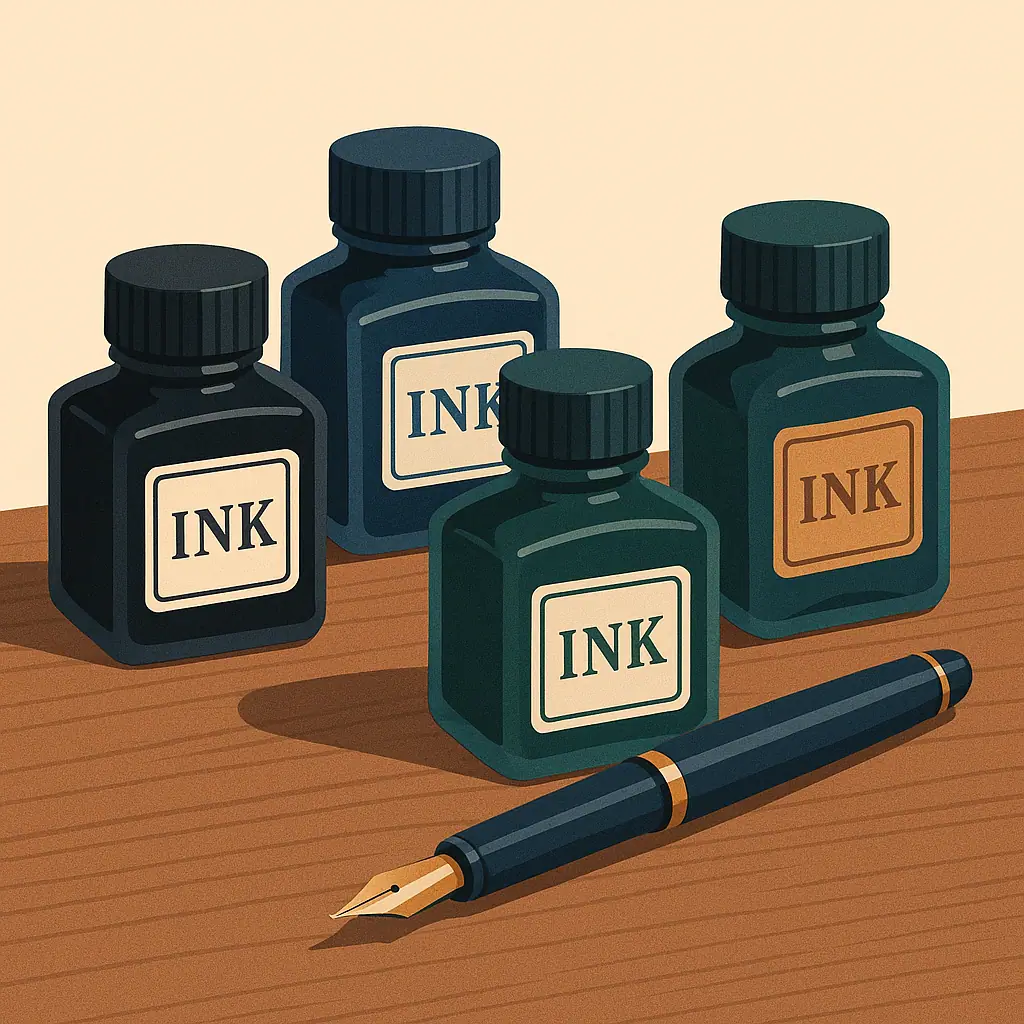
Start with these three inks for maximum versatility:
- One excellent black: Pilot Namiki Black for formal writing and learning
- One reliable blue: Waterman Serenity Blue-Black for everyday use
- One safe color: Diamine Ancient Copper for creative expression
This combination covers 90% of writing situations while teaching you how different inks behave in your specific pen and paper combination. Once you've mastered these, expansion becomes both easier and more meaningful.
Frequently Asked Questions
Should beginners avoid waterproof or permanent inks?
Generally yes. Permanent inks often require more maintenance and can be unforgiving if they dry in your pen. Start with standard washable inks to build good cleaning habits.
How much ink should I buy as a beginner?
A 30ml bottle typically lasts 3-6 months with regular writing. Start with 1-2 bottles rather than collecting many colors immediately.
Are expensive inks worth it for beginners?
Premium inks like Iroshizuku can actually be better for beginners due to superior flow and cleaning properties. The extra cost often pays off in improved writing experience.
Can I mix different ink brands in the same pen?
Not recommended for beginners. Clean your pen thoroughly when switching between different inks to avoid chemical reactions or performance issues.
Final Thoughts
Choosing your first fountain pen inks doesn't need to be overwhelming. Focus on reliability, easy maintenance, and colors that inspire you to write more. The brands and specific inks recommended here have guided thousands of beginners into successful fountain pen relationships.
Remember that your ink preferences will evolve as your experience grows. What seems perfect today might become just one option among many favorites a year from now. That evolution is part of the joy — each new ink teaches you something about color, flow, and the subtle art of fountain pen writing.
Start with quality basics, master the fundamentals of ink maintenance, and then let your curiosity guide you toward the colors and properties that make your writing uniquely yours. The fountain pen world offers endless exploration, but it all begins with that first perfect bottle of ink flowing smoothly onto paper.