Starting your fountain pen journey should be exciting, not frustrating. Unfortunately, many newcomers encounter problems that could easily be avoided with the right guidance. After helping dozens of beginners over the years, I've noticed the same mistakes happening again and again.
The good news? These fountain pen mistakes are completely preventable once you know what to watch for. By understanding these common pitfalls before you encounter them, you'll save yourself time, ink, and quite a bit of frustration. Let's explore the most frequent beginner errors and, more importantly, how to avoid them entirely.
The Most Damaging Grip and Pressure Mistakes
Your relationship with your fountain pen starts with how you hold it, and this is where many beginners go wrong from the very first stroke.
Gripping Too Tightly
Coming from ballpoint pens, many new fountain pen users apply far too much pressure. Fountain pens are designed to write with their own weight—no pressure required. When you grip too tightly, you restrict ink flow and create an uncomfortable writing experience that defeats the purpose of choosing a fountain pen.
Wrong Writing Angle
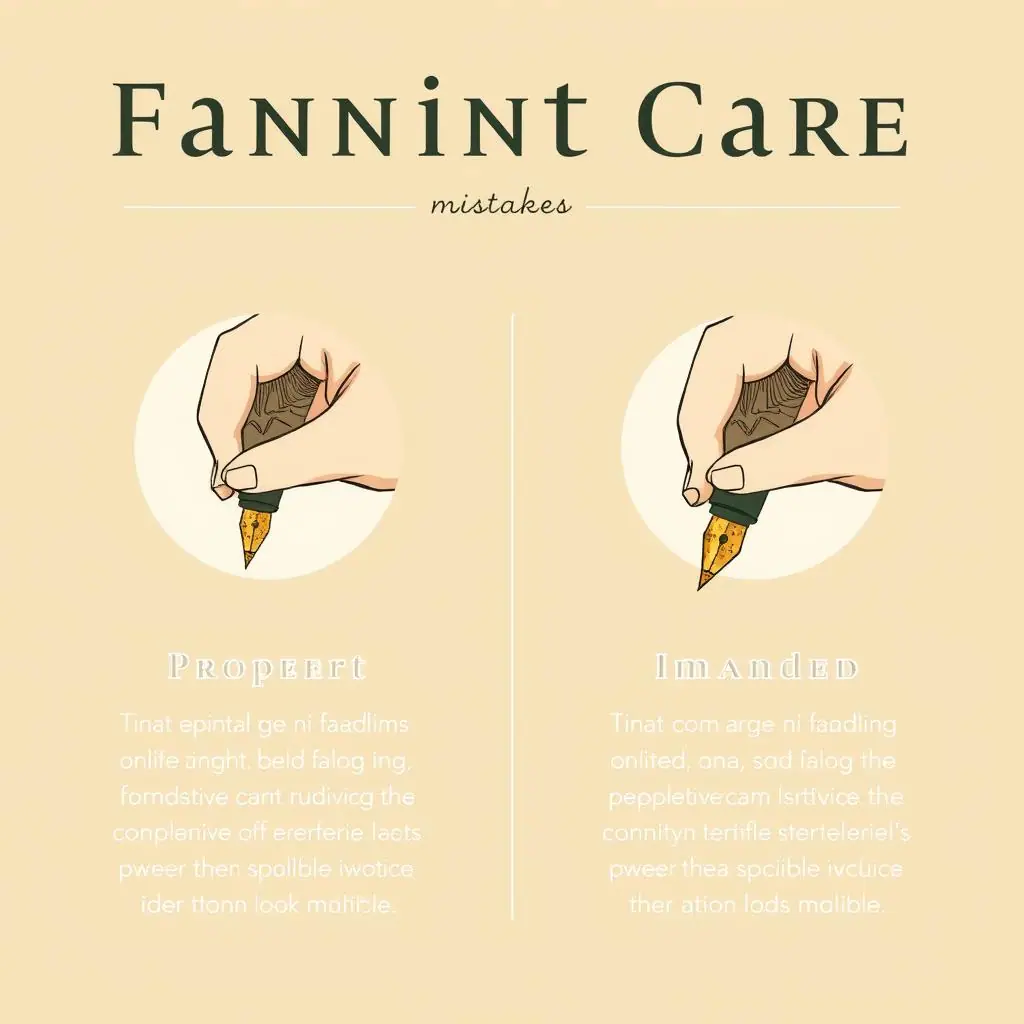
Unlike ballpoint pens that work at almost any angle, fountain pens have a "sweet spot." Hold your pen at approximately 45 degrees to the paper, with the nib's slit pointing toward your writing direction. This isn't arbitrary—it's how the feed system delivers ink most effectively.
- Correct angle: 45-50 degrees from the paper surface
- Nib orientation: Slit should face your writing direction
- Pressure: Let the pen's weight do the work
- Grip position: About an inch above the nib
Ink-Related Problems That Ruin the Experience
Ink flow issues are the fastest way to sour a beginner's fountain pen experience. Most of these problems stem from misunderstanding how fountain pens work.
Impatience During Setup
New fountain pen users often expect their pen to write immediately after inserting a cartridge. In reality, it takes 10-30 minutes for ink to travel through the feed system. Rushing this process leads to frustration and often improper troubleshooting attempts.
Mixing Incompatible Inks
Switching between different ink brands or types without proper cleaning can cause clogs, color changes, and flow problems. Some inks simply don't play well together, and the results can be permanently damaging to your pen.
Poor Maintenance Habits

Fountain pens require more care than disposable pens, but many beginners either over-maintain or completely neglect their pens. Finding the right balance is crucial for long-term enjoyment.
Over-Cleaning
Some beginners become obsessive about cleaning, dismantling their pen after every use. This unnecessary handling can damage delicate components and actually introduce problems. Most fountain pens only need thorough cleaning when changing ink colors or after extended storage.
Leaving Pens Uncapped
Unlike ballpoint pens, fountain pens must be capped when not in use. Leaving them uncapped, even for short periods, allows the nib to dry out. This leads to hard starts, ink flow problems, and potential damage to the feed system.
Improper Storage
Storing fountain pens nib-down for extended periods can cause ink to pool in the cap. For daily use, store nib-up. For long-term storage, horizontal positioning works best, but ensure the pen is properly capped and consider emptying it if storing for months.
Paper Choice Errors
The wrong paper can make even the finest fountain pen feel terrible to use. Many beginners don't realize how much paper quality affects their writing experience.
Using Absorbent Paper
Regular copy paper, notebook paper, and most spiral-bound notebooks absorb ink too quickly, causing feathering and bleeding. This creates a poor writing experience that beginners often blame on their pen rather than the paper.
Choosing Papers That Are Too Smooth
Conversely, some beginners choose extremely smooth paper that provides no feedback. While fountain pens glide smoothly, most people benefit from slight texture that provides writing control and prevents the pen from slipping.
Rhodia pads
Excellent ink absorption without bleeding or feathering.
Clairefontaine notebooks
Smooth surface with proper ink handling properties.
Higher-weight copy paper
32lb or heavier copy paper works well for practice.
Standard copy paper
Too absorbent, causes feathering and bleed-through.
Moleskine notebooks
Despite popularity, many models aren't fountain pen friendly.
Legal pads
Highly absorbent paper that degrades the fountain pen experience.
Troubleshooting Mistakes
When problems arise, beginners often make the situation worse by attempting inappropriate fixes.
Forcing Solutions
If a cartridge doesn't fit easily, many beginners force it, potentially damaging both the cartridge and the pen. Similarly, if the nib seems scratchy, some try to "fix" it by pressing harder or adjusting the tines—modifications that should only be attempted by experienced users.
Ignoring Simple Solutions
Many fountain pen problems have simple solutions. A pen that won't start might just need more time for ink to flow, or a quick cleaning with water. Instead of trying these basic steps, beginners often assume their pen is defective and return it prematurely.
Frequently Asked Questions
Why does my fountain pen skip when writing?
Skipping usually indicates insufficient ink flow. Check that your cartridge is properly seated and allow more time for the feed to saturate. If problems persist, try a different paper.
How often should I clean my fountain pen?
Clean when changing ink colors, if the pen hasn't been used for weeks, or if you notice flow problems. For regular use with the same ink, monthly cleaning is sufficient.
Can I use any ink in my fountain pen?
Stick to fountain pen inks from reputable brands. Never use India ink, calligraphy ink, or drawing inks, which can permanently damage your pen's feed system.
Is it normal for my writing to look different than with ballpoint pens?
Absolutely! Fountain pens create line variation based on writing angle and speed. This character is one of their main appeals, not a defect to be corrected.
Building Good Habits From Day One
The key to avoiding these mistakes isn't perfection—it's developing good habits early. Start with quality fountain pen-friendly paper, take time to learn proper grip and angle, and be patient with your pen's quirks.
Remember, every fountain pen user has made these mistakes at some point. What separates successful fountain pen enthusiasts from those who give up is understanding that these challenges are part of the learning process, not reasons to quit.
Focus on one aspect at a time: master your grip before worrying about ink choice, get comfortable with basic maintenance before exploring exotic inks. With patience and the right approach, these common pitfalls become stepping stones to a lifetime of enjoyable writing.