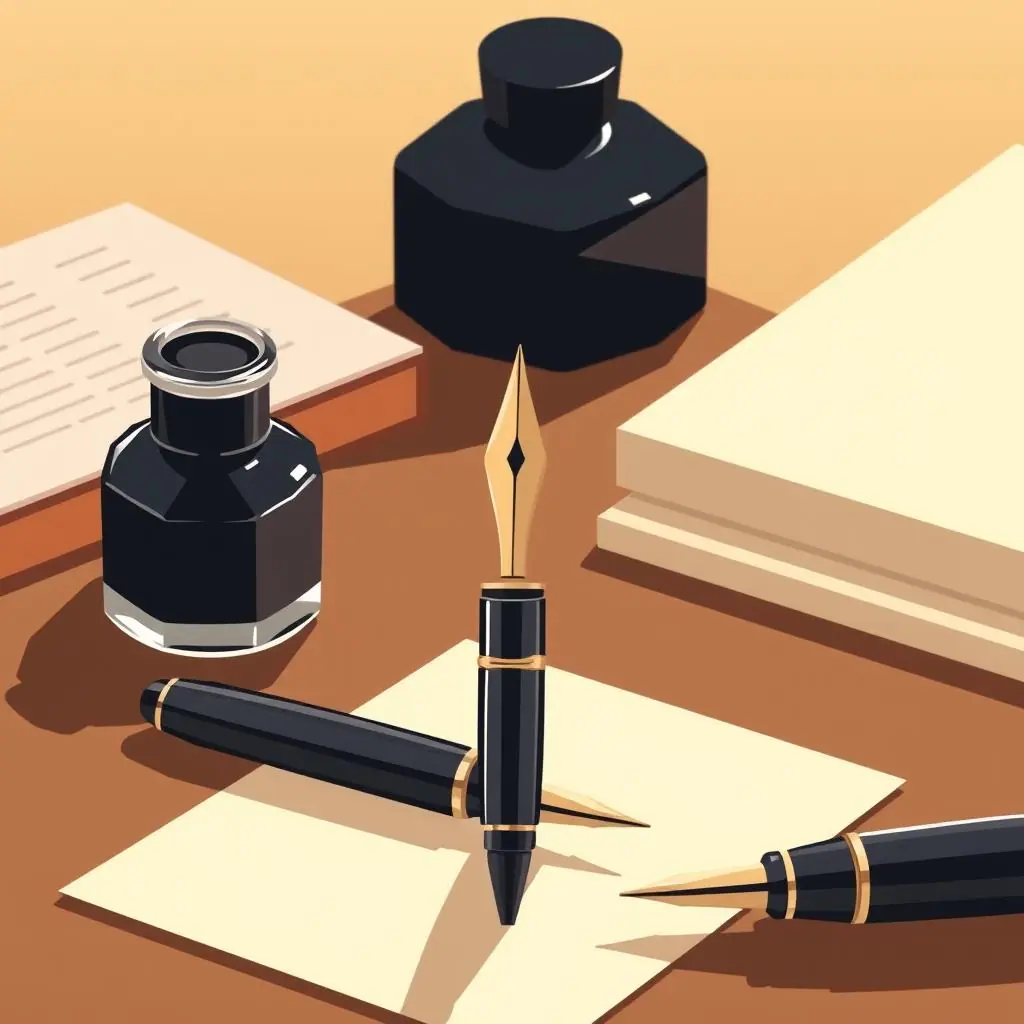
Building a fountain pen ink collection is one of the most enjoyable aspects of the fountain pen hobby. Unlike collecting for collecting's sake, a well-curated ink collection becomes a personal palette of colors that reflects your writing personality, preferences, and the stories you want to tell on paper.
There's something deeply satisfying about having the perfect ink color for any writing occasion—whether it's a formal letter in classic blue-black, a journal entry in warm brown, or a thank-you note in an elegant green. Your ink collection should feel like an extension of your voice, offering colors that inspire and enhance every writing experience.
Starting with Purpose: Defining Your Collection Goals
Before diving into the vast world of fountain pen inks, take a moment to consider what you want your collection to accomplish. Different writers have different needs, and understanding your own priorities will help you build a collection that truly serves you.
Common Collection Approaches
Some collectors focus on:
- Practical versatility: A small collection of reliable, everyday colors for all situations
- Color exploration: Sampling many different hues to discover personal favorites
- Brand loyalty: Building depth within one or two trusted manufacturers
- Special properties: Focusing on inks with unique characteristics like water resistance or shading
- Seasonal rotation: Having different colors for different times of year or moods
There's no right or wrong approach—the best collection is the one that brings you joy and serves your actual writing needs. Many successful collectors combine elements from several approaches as their preferences evolve.
The Foundation: Your First Five Inks
Every great fountain pen ink collection starts with a solid foundation. These first few bottles will likely be your most-used inks, so choosing versatile, reliable colors ensures you'll always have something appropriate to write with.
A well-rounded starter collection typically includes:
🖤 One Classic Black
Essential for formal documents, signatures, and any writing that needs to look professional. Consider Waterman Intense Black or Parker Quink Black for reliability and wide compatibility.
🔵 One Trustworthy Blue
Your everyday workhorse ink. Waterman Serenity Blue or Pilot Blue are excellent choices that work well in all pens and situations.
🟤 One Warm Brown
Adds character to personal writing without being too bold. Diamine Ancient Copper or Waterman Havane provide beautiful, readable browns.
Expanding Thoughtfully: The Growth Phase
Once you've established your foundation, expansion becomes an exciting journey of discovery. This is where your personal preferences really start to shine, and your collection begins to reflect your unique writing personality.
Rather than buying bottles randomly, consider adding inks that fill specific gaps in your collection or serve particular purposes. Perhaps you need a green for editing, a purple for special correspondence, or want to explore the subtle differences between various blue-blacks.
Sample vials are invaluable during this phase. Most fountain pen retailers offer small samples that let you test colors thoroughly before committing to full bottles. This approach saves money and prevents the disappointment of buying a color that doesn't work as expected in your pens or with your writing style.
Color Families and Harmony
As your collection grows, you'll start to notice patterns in the colors that appeal to you. Some collectors gravitate toward cool blues and greens, while others prefer warm browns and oranges. Understanding your color preferences helps guide future additions and creates a harmonious collection.
Building Color Stories
Consider how your inks work together to tell different stories:
- Professional palette: Blues, blacks, and blue-blacks for business writing
- Creative collection: Purples, greens, and unique colors for artistic expression
- Seasonal selection: Warm colors for autumn, cool blues for summer
- Vintage vibes: Classic colors that evoke different historical periods
You don't need to commit to just one theme—many collectors enjoy having several mini-collections within their larger collection, each serving different aspects of their writing life.
Quality vs. Quantity: Making Smart Choices
Better Knowledge
Fewer bottles means you really get to know each ink's behavior and characteristics.
Higher Quality
Budget can go toward premium inks rather than quantity of mediocre ones.
Less Waste
Inks actually get used instead of sitting forgotten on shelves.
Easier Maintenance
Fewer bottles to organize, track, and properly store.
FOMO
Fear of missing out on new releases or limited editions can create pressure.
Less Variety
Fewer options for matching specific moods or occasions.
Slower Discovery
Takes longer to find new favorites when being selective.
Special Occasion and Seasonal Inks
While your foundation inks handle everyday writing, special occasion inks add personality and fun to your collection. These might be colors you use only for holiday cards, birthday letters, or journal entries about particularly meaningful experiences.
Building Your Special Collection
Consider adding inks that connect to your life and interests:
- Meaningful colors: Inks that remind you of places, people, or experiences
- Holiday traditions: Festive colors for seasonal correspondence
- Hobby connections: Colors that relate to your other interests or passions
- Mood inks: Colors that reflect or enhance different emotional states
These special inks don't need to be practical for everyday use—they just need to spark joy and enhance your connection to the writing experience.
Organization and Care for Your Growing Collection
As your collection expands, good organization becomes essential for actually enjoying and using your inks. A well-organized collection is not just about neat storage—it's about creating a system that encourages you to explore and use different colors regularly.
Practical Organization Strategies
Consider organizing by:
- Color families: Blues together, browns together, etc.
- Use frequency: Daily inks easily accessible, special occasions stored separately
- Brands: Keeping each manufacturer's inks grouped together
- Properties: Water-resistant inks, fast-drying inks, vintage-safe inks in distinct areas
Whatever system you choose, consistency is key. A simple, logical organization that you can maintain is better than a complex system that becomes overwhelming.
Avoiding Common Collection Pitfalls
Every ink collector eventually learns certain lessons through experience. Learning from others' mistakes can help you build a more satisfying collection from the start.
Smart Collection Habits
Successful collectors often:
- Sample before buying: Testing colors thoroughly prevents disappointment
- Use what they have: Regularly cycling through inks instead of always reaching for the same bottle
- Track preferences: Keeping notes about what works and what doesn't
- Buy for actual use: Choosing inks they'll realistically write with, not just admire
- Set boundaries: Having some limits prevents overwhelming accumulation
Frequently Asked Questions
How many fountain pen inks do I really need?
There's no magic number, but many satisfied collectors find that 8-15 carefully chosen inks meet all their needs. Quality and personal preference matter more than quantity.
Should I buy full bottles or samples when starting?
Start with samples for colors you're unsure about, and buy full bottles only for colors you know you love or for basic colors you'll use regularly (like blue and black).
How do I know if an ink will work well in my pen?
Most quality fountain pen inks work in most pens, but vintage pens may need gentler formulations. When in doubt, stick with established brands like Waterman, Parker, or Pilot.
What's the best way to track my ink collection?
Many collectors use simple notebooks or digital tools like Fountain Pen Companion. The key is recording what you like about each ink and how it performs in your pens.
Final Thoughts
Creating your personal fountain pen ink collection is a journey of discovery that should bring joy to every step. The goal isn't to accumulate the most bottles or try every color available—it's to curate a selection of inks that enhance your writing experience and reflect your unique personality.
Take your time, enjoy the process, and remember that the best collection is one that gets used regularly. Every bottle should have a purpose, whether practical or purely for the pleasure it brings to your writing. Start with quality basics, expand thoughtfully, and most importantly, have fun exploring the wonderful world of fountain pen inks.