Walking into a fountain pen shop for the first time can feel overwhelming – rows upon rows of colorful ink bottles, mysterious terms like "dye-based" and "pigment," and cartridges versus converters. When I started my fountain pen journey fifteen years ago, I remember feeling exactly the same way. The good news? Understanding fountain pen ink types is actually quite straightforward once you know the basics.
This guide will walk you through everything a beginner needs to know about fountain pen inks. By the end, you'll confidently choose the right ink type for your writing style, whether you're penning daily journal entries or important documents. Let's demystify the wonderful world of fountain pen inks together.
The Three Main Ink Delivery Systems
Before diving into ink chemistry, let's understand how ink gets into your fountain pen. There are three primary ways to fill your pen, each with distinct advantages for different users.
Cartridge Systems: Convenience First
Cartridges are small plastic containers pre-filled with ink that simply slide into your fountain pen. Think of them like ink pods – clean, convenient, and foolproof. Most fountain pens accept standard international cartridges, though some brands like Lamy, Pilot, and Parker use proprietary sizes.
Best for: Beginners, travel, office use, anyone who values convenience over variety. Cartridges eliminate the possibility of spills and make ink changes quick and mess-free.
Converter Systems: Best of Both Worlds
A converter is a reusable cartridge with a filling mechanism – usually a piston or twist system. It allows you to use bottled ink while maintaining the convenience of not permanently modifying your pen. Simply dip the nib into an ink bottle, operate the filling mechanism, and you're ready to write.
Best for: Writers who want access to the full spectrum of bottled ink colors while keeping things relatively simple. Converters offer environmental benefits over disposable cartridges.
Built-in Filling Systems: Maximum Capacity
Some fountain pens have internal reservoirs with built-in filling mechanisms – piston fillers, vacuum fillers, or cartridge/converter systems that hold more ink than standard converters. These systems typically hold 2-3 times more ink than cartridges.
Best for: Heavy writers, those who prefer longer writing sessions without refilling, and fountain pen enthusiasts who enjoy the mechanical aspects of their pens.
Ink Chemistry: Dye-Based vs Pigment Inks
Understanding the fundamental difference between dye-based and pigment inks helps you choose the right type for your specific needs. Each has distinct characteristics that make them suitable for different purposes.
Dye-Based Inks: Vibrant and Flowing
Dye-based inks dissolve completely in water, creating a uniform liquid solution. The colorants are molecularly dissolved, resulting in brilliant, saturated colors that flow smoothly through fountain pen feed systems. Most fountain pen inks fall into this category.

Advantages:
- Superior flow: Smooth operation in virtually all fountain pens
- Vibrant colors: Exceptional color saturation and brilliance
- Easy maintenance: Water-soluble nature makes pen cleaning simple
- Quick-drying: Generally dry faster than pigment inks
- Wide variety: Thousands of color options available
Limitations:
- Water vulnerability: Can smudge or wash away when wet
- Light sensitivity: Colors may fade over time with UV exposure
- Document permanence: Not archival for important records
Pigment Inks: Permanent and Archival
Pigment inks contain microscopic solid particles suspended in liquid. These particles don't dissolve but remain physically suspended, creating different flow characteristics and permanence properties.
Advantages:
- Water resistance: Won't wash away once dry
- Lightfast: Colors remain stable under UV exposure
- Archival quality: Suitable for important documents
- Document security: Cannot be easily altered or removed
Considerations:
- Flow requirements: May need wetter-writing nibs
- Maintenance: Requires more frequent pen cleaning
- Color selection: Limited color options compared to dyes
- Drying time: Often slower to dry than dye-based inks
Special Ink Categories
Beyond basic dye and pigment classifications, several specialty ink types serve specific purposes or add visual interest to your writing.
Iron Gall Inks: Historical Permanence
Iron gall inks represent one of the oldest ink formulations, used for centuries in historical documents. These inks start blue-black or purple when wet, then oxidize to permanent black over time. Modern formulations balance historical authenticity with fountain pen safety.
Characteristics: Excellent permanence, unique color transformation, historical significance, requires careful pen maintenance due to acidic nature.
Shimmer and Sheen Inks: Visual Interest
These specialty inks contain additional particles that create visual effects. Shimmer inks include glitter particles, while sheen inks show color shifts on certain papers. Popular among fountain pen enthusiasts for artistic writing and special occasions.
Note: These inks may require wider nibs and more frequent cleaning due to particle content.
Waterproof and Document Inks
Specially formulated for permanence without the maintenance requirements of true pigment inks. Examples include Noodler's Bulletproof series and De Atramentis Document inks.
Choosing Your First Inks
For beginners, I recommend starting with well-regarded dye-based inks from established manufacturers. These provide reliable performance while you develop your fountain pen skills.
Excellent starter inks include:
- Pilot Iroshizuku series: Premium quality, beautiful colors, excellent flow
- Waterman inks: Conservative, reliable, pen-safe formulation
- Parker Quink: Widely available, affordable, time-tested
- Sailor Jentle: High-quality Japanese inks with unique colors
- Lamy cartridges: If using Lamy pens, their proprietary cartridges are excellent
Pros and Cons of Different Ink Types
Cartridge Convenience
Clean, quick changes with no mess or measuring required for everyday writing.
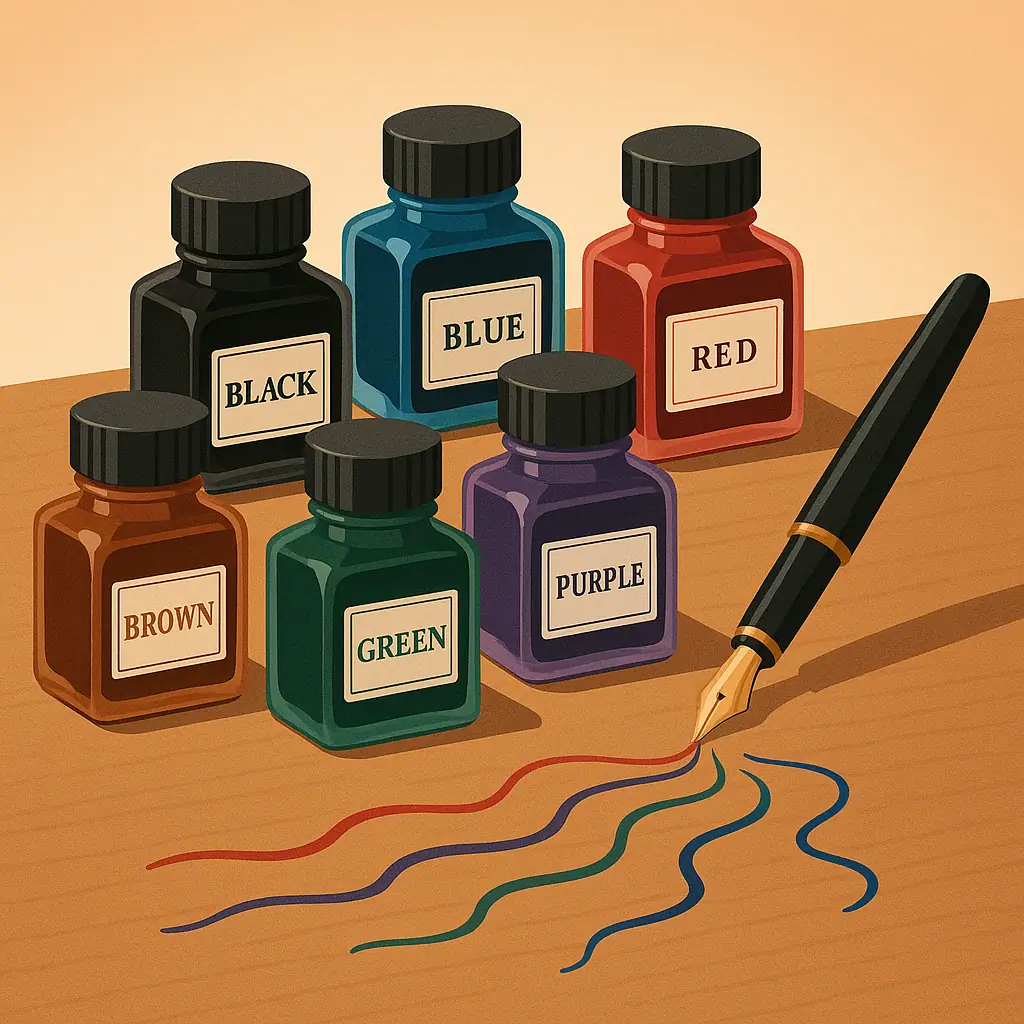
Bottled Variety
Thousands of color options and specialty formulations not available in cartridges.
Dye Ink Performance
Smooth flow, vibrant colors, and easy maintenance make writing effortless.
Cartridge Cost
Per-milliliter cost is much higher than bottled ink for regular writers.
Pigment Complexity
Requires more attention to pen maintenance and careful nib selection.
Water Vulnerability
Most dye inks can smudge or fade when exposed to moisture.
Frequently Asked Questions
Can I use any ink in any fountain pen?
Most modern fountain pens work with standard fountain pen inks, but always check compatibility. Avoid India ink, acrylic inks, or calligraphy inks not specifically made for fountain pens.
How long does fountain pen ink last?
Unopened bottles can last decades. Once opened, most inks remain good for several years if stored properly. Cartridges typically last 2-3 years.
Should beginners start with cartridges or bottled ink?
Cartridges are perfect for learning fountain pen basics. Once comfortable, try bottled ink with a converter to explore more color options.
What's the difference between washable and permanent ink?
Washable (dye-based) inks can be removed with water, while permanent inks (pigment or special formulations) resist water and chemicals once dry.
Building Your Ink Knowledge
Understanding fountain pen ink types opens the door to a world of writing pleasure. Start with simple, reliable inks that match your needs – whether that's convenient cartridges for daily note-taking or a few bottles of beautiful colors for special writing projects.
Remember, there's no "perfect" ink for everyone. The joy lies in discovering what works for your writing style, pen collection, and personal preferences. Take your time exploring, and don't be afraid to try new colors or formulations as your confidence grows. The fountain pen community is incredibly generous with advice and recommendations when you're ready to expand your horizons.