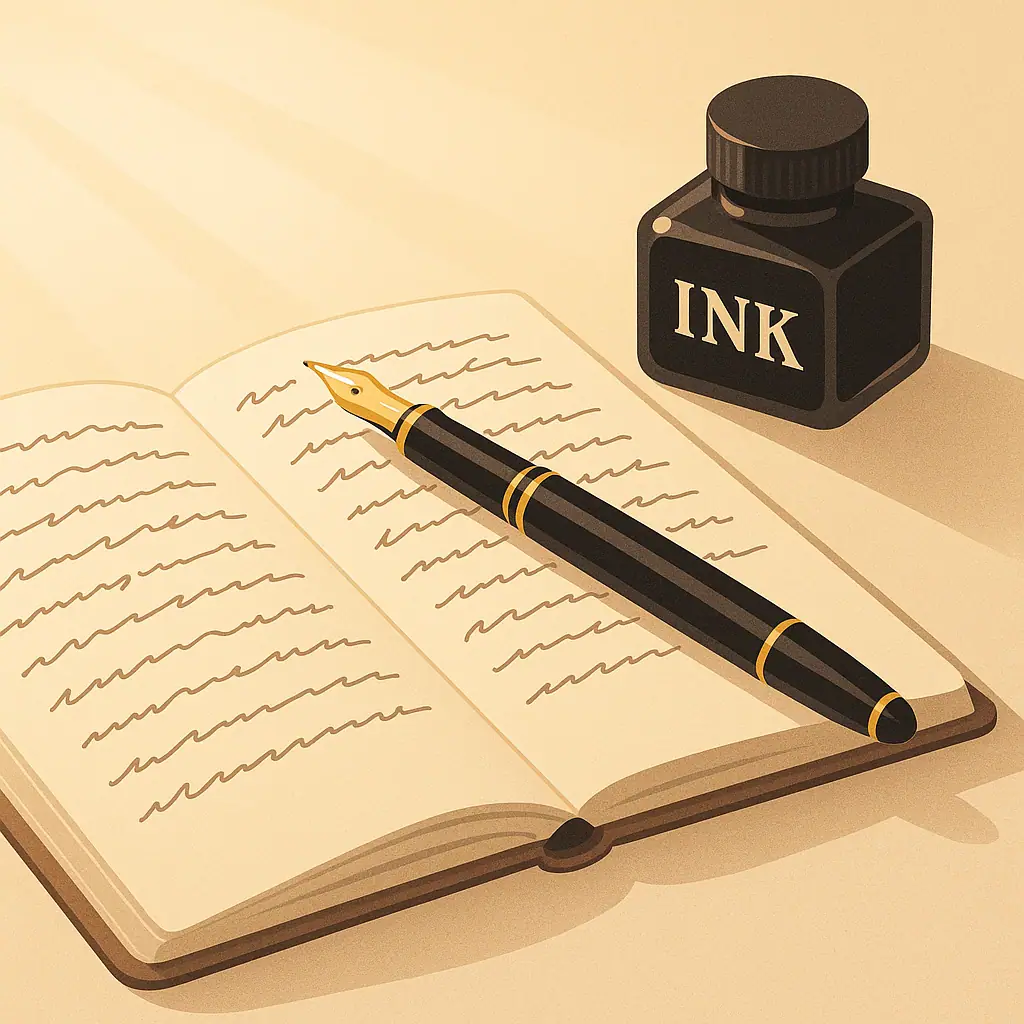
There's something undeniably satisfying about opening a fresh notebook, uncapping a fountain pen, and letting your thoughts flow across the page. Journaling with a fountain pen transforms an ordinary habit into a small daily ritual — one that feels deliberate, personal, and deeply rewarding.
If you've been thinking about starting a handwritten journal but weren't sure how to begin, this guide will walk you through everything you need. From choosing your first journal to building a consistent writing practice, you'll have all the tools to get started with confidence.
What Is Fountain Pen Journaling?
Fountain pen journaling is simply the practice of keeping a handwritten journal using a fountain pen instead of a ballpoint or gel pen. The difference feels immediately apparent — a fountain pen glides across paper with minimal effort, delivering smooth, expressive lines that make the act of writing feel genuinely pleasurable.
Unlike typing on a phone or computer, fountain pen journaling engages both your mind and your hands. The slower pace encourages reflection. The tactile feedback of nib on paper creates a connection to your words that digital writing rarely achieves. Many journalers describe the switch as transformative — not because of what they wrote, but because of how it felt to write it.
Why Start a Handwritten Journal with a Fountain Pen?
Journaling itself offers well-documented benefits — reduced stress, improved mental clarity, better emotional processing, and sharper memory. Research published in the Journal of Experimental Psychology found that expressive writing helps people manage intrusive thoughts and focus more effectively.
Adding a fountain pen to the equation makes the habit even more rewarding. The physical experience of writing by hand with a quality pen slows you down in a useful way. You're not just recording thoughts — you're engaging with them. The pen becomes part of the ritual itself.
Setting Up Your Fountain Pen Journaling Practice
Getting started is simpler than you might think. You need three things: a pen, a notebook, and a time to write. Let's look at each one.
Choosing a Pen for Journaling
For daily journaling, you want a pen that's comfortable for extended writing sessions. A medium nib size works beautifully — it provides a smooth line without requiring much pressure, making it forgiving for beginners. Popular choices include the Pilot Metropolitan, Lamy Safari, or TWSBI Eco, all of which are excellent for daily use and available under $40.
You don't need an expensive pen to start. Any reliable beginner fountain pen that fits comfortably in your hand will serve you well for years of daily journaling.
Choosing a Journal
Paper quality matters significantly with fountain pens. Look for notebooks with paper weight of at least 80 gsm to prevent ink from bleeding through or feathering. Rhodia and Leuchtturm1917 are beloved by fountain pen journalers for their smooth, fountain pen-friendly paper. Clairefontaine is another excellent choice, especially for those who enjoy seeing ink shading and sheen.
The size and format depend on personal preference. Many people prefer an A5 notebook — compact enough to carry, but spacious enough to write freely without feeling cramped.
Choosing Your Ink
For everyday journaling, a well-behaved blue or black ink is your most practical starting point. Waterman Serenity Blue, Pilot Iroshizuku Ama-iro, and Diamine Oxford Blue are all popular among fountain pen journalers. As you grow more comfortable, you can explore inks with interesting shading, shimmer, or unique color profiles that make your journal pages come alive.
Practical Tips for Consistent Journaling
- Start small: Begin with just 5–10 minutes a day. You don't need to write essays — a few thoughtful sentences are enough to build the habit.
- Write at the same time each day: Morning journaling sets an intention for the day; evening journaling helps process what happened. Consistency matters more than length.
- Use prompts when stuck: "What's on my mind right now?" or "What made me smile today?" can break the blank-page paralysis that every new journaler encounters.
- Don't worry about perfection: Your journal is for your eyes only. Messy handwriting, crossed-out words, and random tangents are all entirely welcome.
- Keep your pen beside your journal: A pen left capped on your desk next to your notebook reduces friction and makes it easier to start each session without searching.
Pros and Cons of Starting a Fountain Pen Journal
More Enjoyable Writing Experience
The smooth glide of a fountain pen nib makes the physical act of writing genuinely pleasurable, which helps you stay consistent over time.
Encourages Slower, Deeper Thinking
Writing by hand forces you to slow down, which naturally leads to more reflective and thoughtful journal entries.
Reduces Screen Time
A handwritten journal creates a screen-free space for reflection — a welcome daily break from phones, tablets, and computers.
Creates a Personal Keepsake
Handwritten journals become irreplaceable physical records of your life — something a digital app can never fully replicate.
Paper Requirements Are Specific
Not every notebook works well with fountain pens. You'll need to invest in fountain pen-friendly paper to avoid feathering and bleed-through.
Initial Learning Curve
Writing with a fountain pen feels different from ballpoints, and some adjustment time is normal. Most beginners feel comfortable within a week of regular use.
Frequently Asked Questions
Do I need an expensive fountain pen to start journaling?
Not at all. The Pilot Metropolitan and Platinum Preppy are both under $20 and perform beautifully for daily journaling. Start with something affordable and upgrade only if and when you want to explore more.
What should I write about in my journal?
Anything that's on your mind — your day, how you're feeling, what you're grateful for, a problem you're working through, or a memory you want to preserve. There are no rules. Your journal is entirely yours.
Will fountain pen ink smear in my journal?
Standard fountain pen ink dries within a few seconds on quality paper. Give it a brief moment before turning the page and you'll have no smearing issues. Avoid highly saturated specialty inks if dry time is a concern.
How long should each journal entry be?
As long as feels right. Some days you'll fill two pages; other days, a single paragraph is plenty. The goal is consistency over volume — showing up regularly matters far more than writing at length.
Final Thoughts
Starting a fountain pen journal is one of those small decisions that can quietly change your daily life. The combination of a quality pen, good paper, and a dedicated few minutes each day creates a practice that is both grounding and deeply satisfying.
You don't need to be a writer. You don't need perfect handwriting. You just need to start — and let the pen do what it does best: help you think, feel, and remember.