

There is something genuinely transformative about having a dedicated writing space. When fountain pen writing becomes more than a casual habit — when it starts to feel like a ritual — the environment around you begins to matter. A thoughtful writing space is not about luxury. It is about removing friction so the act of writing feels natural, inviting, and worth returning to each day.
Whether you have a full home office or a single corner of your kitchen table, you can create a fountain pen writing space that supports better writing habits and protects your pens and inks in the process.
Why Your Writing Environment Matters
Fountain pens are precision tools. Unlike a ballpoint that you can click on and scribble anywhere, a fountain pen rewards a bit of ceremony. Keeping your pens properly stored extends their life and keeps nibs primed. Having your paper and inks organized means less hesitation before sitting down to write.
Research in behavioral psychology consistently shows that dedicated environments reinforce habits. When your writing space looks and feels right, you are far more likely to use it consistently. This is especially meaningful for those of us who are rediscovering the pleasure of handwriting — the space itself becomes part of the ritual and the joy.
Essential Elements of a Fountain Pen Writing Space
You need very little to begin: a clean surface, good light, your pen, a bottle of ink or spare cartridges, and your notebook. Everything else is refinement, not requirement.
Here are the elements that make a real difference once you decide to set up a proper space:
- A stable, clutter-free writing surface: A solid desk or table that does not wobble prevents inconsistent nib contact. Even a small cleared section of a dining table works if you are consistent about using it.
- A pen rest or stand: Resting your uncapped pen horizontally keeps the nib primed between sentences. Pen rolls and pen trays both work well for one to five daily writers.
- Dedicated ink storage: Keep bottles upright in a drawer or small box, away from direct sunlight. Ink degrades with heat and UV exposure over time.
- Blotting paper or a small cloth: A piece of cloth or a blotter on your desk handles quick ink checks and nib wipes without scrambling for napkins mid-session.
- A notebook that stays open: A lay-flat binding is far more comfortable for sustained writing. Spiral, stitched, or flexible glued spines all work. Stiff hardcovers that spring shut mid-sentence are a small frustration that compounds over time.
Lighting That Works for Writing
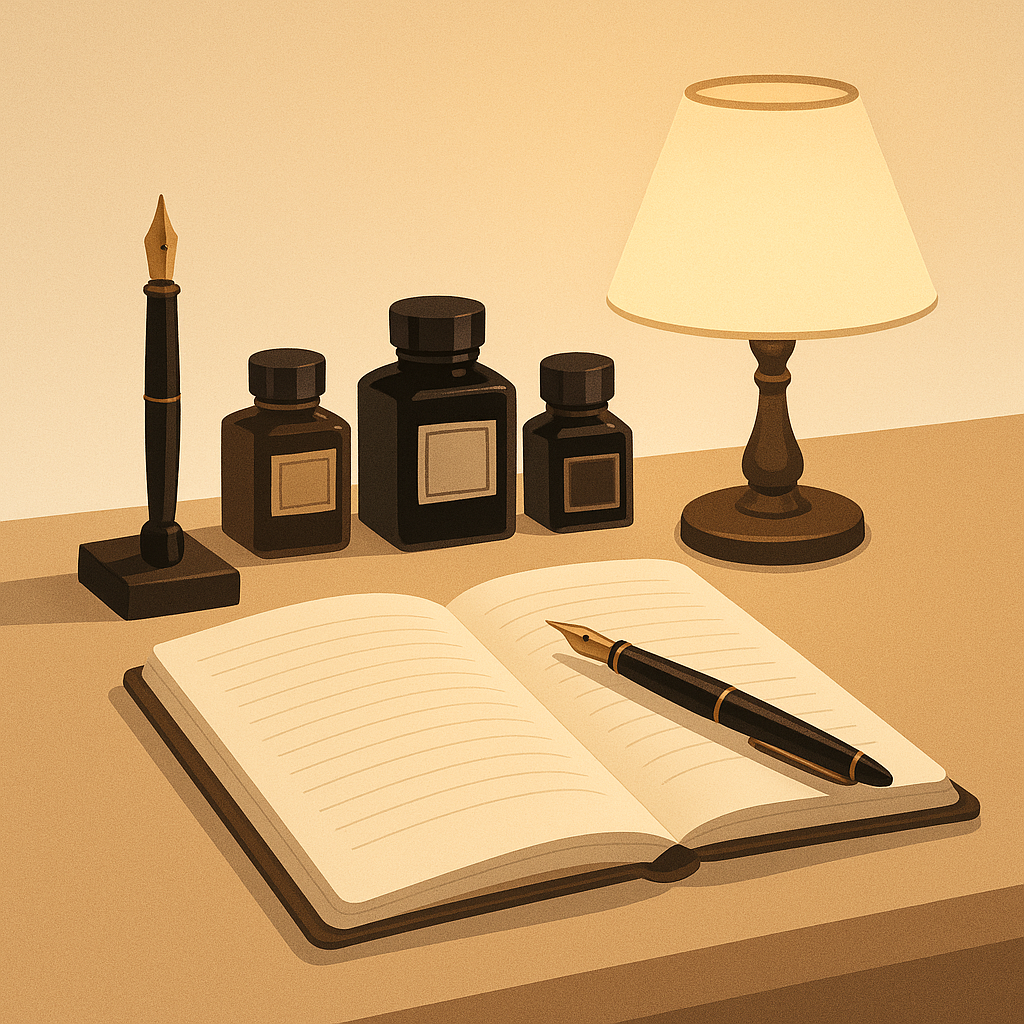
Good lighting is underrated in fountain pen circles. When you write in poor light, you tend to grip tighter and hunch closer to the page — both habits that work against the light, fluid touch fountain pens require.
- Natural light is ideal: Position your writing space near a window if possible. Morning light from an east-facing window is particularly pleasant for journaling or letter-writing routines.
- LED desk lamp with warm white setting: For evenings or low-light rooms, look for an LED lamp with a Color Rendering Index (CRI) of 90 or higher. This renders ink colors accurately — satisfying when you have chosen a beautiful blue or green ink.
- Avoid glare: Position your lamp to the left if you are right-handed, and to the right if left-handed, so your writing hand does not cast a shadow across the page.
Organizing Your Pens and Inks
Organization is largely personal, but a few principles hold across different setups and collection sizes:
- Separate daily writers from display pieces: The pens you reach for every day belong on your desk. Pens you rotate less frequently store better horizontally in a case or vertically nib-up in a drawer organizer.
- Never store inked pens nib-down for extended periods: Ink can seep into the barrel and cause feed flooding or mess when you next uncap the pen.
- Label your inks: If you have more than three or four bottles, small adhesive labels with the ink name save you from opening every bottle to find the one you want.
- Keep a dedicated cleaning area: A small bowl and a cup for rinsing nibs, placed away from your main writing surface, keeps the ritual clean and pleasant rather than messy.
Pros and Cons of a Dedicated Writing Space
Builds a consistent habit
A dedicated space signals to your brain that it is writing time, making it easier to sit down and start without deliberation.
Protects your equipment
Proper pen and ink storage prevents accidental drying, spills, and UV damage to both inks and pen materials over time.
Elevates the experience
A thoughtful setup turns writing from a task into something you genuinely look forward to returning to each day.
Requires initial setup time
Organizing and arranging your space takes a small investment of time, though most writers find it enjoyable rather than burdensome.
Space may be limited
Not everyone has a spare desk or dedicated corner. A portable pen roll and small carry case can solve this for smaller living situations.
Frequently Asked Questions
Do I need a special desk for fountain pen writing?
No. Any stable, flat surface works. The key is consistency — using the same space regularly trains your mind to shift into a focused writing mindset.
How should I store pens I use every day?
Horizontal is best for inked pens in daily use — it keeps the nib primed. A pen tray, pen roll, or simple desk stand all work beautifully for this purpose.
Can sunlight damage my fountain pen inks?
Yes. Direct sunlight fades dye-based inks and can cause bottles to degrade over time. Store ink bottles in a drawer or cabinet away from windows.
What if I want to write in different rooms?
A pen roll with two or three of your favorite pens plus a slim notebook travels beautifully. Many writers keep a travel kit separate from their main desk setup.
Final Thoughts
Your writing space does not need to be elaborate or expensive. It simply needs to be yours — organized, comfortable, and equipped with the basics that let you uncap a pen and begin writing without friction. The ritual of settling into your space, choosing a pen and ink, and opening your notebook is itself part of what makes fountain pen writing such a rewarding daily practice.
Start simply. A cleared corner, one pen rest, and good light is enough. Build from there as your collection and your routines grow together.