When you pick up a Sheaffer 100 fountain pen for the first time, you immediately understand why this American brand has survived for over a century. The pen feels solid, balanced, and purposeful — no plastic creak, no loose parts, just honest craftsmanship at a price that won't make you nervous about daily use.
I bought my Sheaffer 100 three years ago as a "step up" from my beginner pens, and it has become my reliable workhorse. It's the pen I grab when I need something dependable for long writing sessions, thank-you notes, or everyday journaling. Today, I want to share why this unassuming pen punches well above its weight class.
The Sheaffer Legacy: American Craftsmanship Since 1913
Sheaffer Pen Company was founded in 1913 in Fort Madison, Iowa, by Walter A. Sheaffer — a jeweler who revolutionized fountain pen design with the lever-filling system. For decades, Sheaffer pens were status symbols, carried by business leaders, military officers, and writers who valued American quality and innovation.
While the company has changed ownership over the years, the Sheaffer 100 carries on that tradition beautifully. It's not trying to be flashy or trendy. Instead, it offers something more valuable: reliable performance at a fair price. This is a pen that respects both your wallet and your writing.
Design & Build Quality That Feels Premium
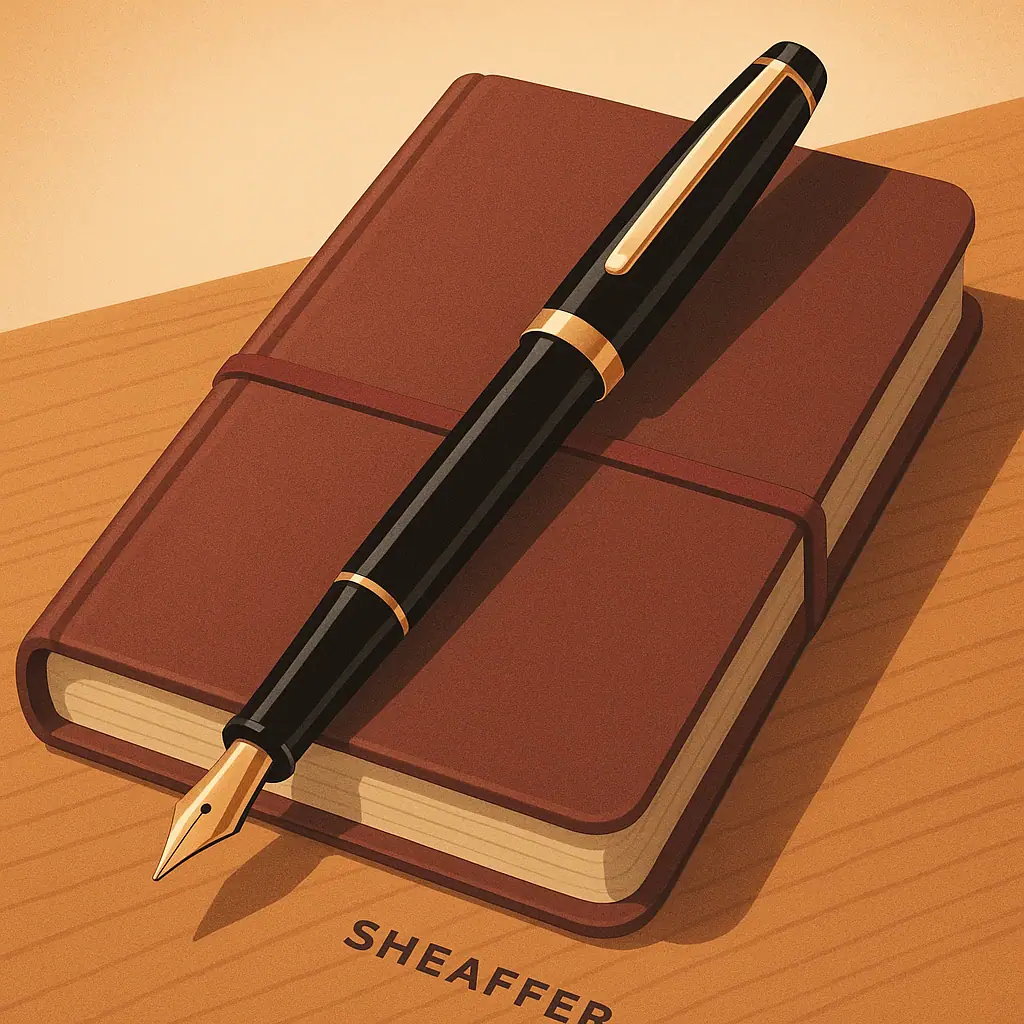
The Sheaffer 100 has a timeless, understated design that looks professional without being stuffy. The standard models feature a glossy lacquer barrel (available in black, blue, or burgundy) with chrome or gold-tone trim. The iconic white dot on the clip — Sheaffer's symbol of quality since 1924 — adds a touch of heritage without being ostentatious.
What impressed me most is the build quality. The barrel is made from durable brass with a thick lacquer finish that resists scratches and fading. The cap posts securely with a satisfying click, and the clip is spring-loaded and strong enough to handle daily pocket carry. This doesn't feel like a $40 pen — it feels like a $100 pen at a $40 price.
Key design features:
- Brass construction: Adds weight and durability compared to plastic pens
- Glossy lacquer finish: Available in classic colors (black, blue, burgundy)
- White dot clip: Sheaffer's iconic quality symbol since 1924
- Secure cap: Posts firmly on the back, no wobble or looseness
Writing Performance: Smooth, Wet, and Reliable
This is where the Sheaffer 100 truly shines. The stainless steel nib writes smoothly with generous ink flow — definitely on the wetter side, which I personally love. If you enjoy seeing your ink's shading and character, this pen will make you happy. The medium nib lays down a satisfying line that's perfect for both everyday writing and more expressive journaling.
I've used mine on everything from cheap copy paper to premium Rhodia, and it performs beautifully on all of them. No skipping, no hard starts, no scratching. It writes the moment it touches paper, every single time. That reliability is worth its weight in gold when you're in the middle of an important thought and don't want interruptions.
The pen uses standard Sheaffer cartridges or a Sheaffer converter for bottled ink. The converter works well, though it holds a bit less ink than some competitors. Still, the convenience of cartridges and the option to explore bottled inks gives you the best of both worlds.
Exceptional Value for Money
Here's the truth: at around $40-50, the Sheaffer 100 offers exceptional value. You're getting a solidly built pen with a smooth, reliable nib, classic design, and a name that means something. Compare this to similarly priced pens, and the Sheaffer consistently punches above its weight.
It's ideal for:
- Upgrading from beginner pens: A meaningful step up from Pilot Metropolitan or Lamy Safari
- Daily carry without worry: Quality construction you can rely on, priced low enough you won't panic if it gets dinged
- Gift-giving on a budget: Looks and writes like a much more expensive pen, perfect for graduates or pen enthusiasts
- Building a rotation: Affordable enough to own multiple colors or nib sizes
Some fountain pen enthusiasts dismiss the Sheaffer 100 as "entry-level," but I think that misses the point. This pen doesn't need to apologize for being affordable. It's honest, dependable, and well-made — qualities that matter far more than hype or status.
Pros and Cons
Exceptional Build Quality for the Price
Brass construction with durable lacquer finish. Feels premium, not cheap.
Smooth, Generous Ink Flow
Stainless steel nib writes beautifully with no skipping or hard starts. Wet flow shows off ink character.
Timeless, Professional Design
Classic aesthetic with Sheaffer's iconic white dot. Looks right in any setting.
Outstanding Value
Around $40-50 gets you a pen that writes and feels like it costs twice as much.
Proprietary Cartridges/Converter
Uses Sheaffer-specific cartridges and converter, not standard international. Keep spares on hand.
Wet Nib May Not Suit Everyone
If you prefer dry, precise writing, the generous ink flow might feel too wet. Great for expressive writing, less ideal for tiny handwriting.
Limited Nib Options
Typically available in Medium or Fine only. No broad or italic options from the factory.
Frequently Asked Questions
Is the Sheaffer 100 good for beginners?
Absolutely. It's reliable, smooth, and affordable. The medium nib is forgiving and requires no break-in. Perfect as a first "serious" fountain pen or an upgrade from ultra-budget models.
How does it compare to the Lamy Safari or Pilot Metropolitan?
The Sheaffer 100 feels more premium than both. It's heavier, smoother, and writes wetter. If you've enjoyed those pens and want something that feels like a step up, the Sheaffer 100 is an excellent choice.
Can I use bottled ink?
Yes! Purchase a Sheaffer converter (sold separately or sometimes included) to use any bottled fountain pen ink. This opens up a world of colors and ink properties beyond cartridges.
Is it durable enough for daily carry?
Yes. The brass body and thick lacquer finish can handle daily pocket or bag carry. The cap posts securely and the clip is strong. Just avoid dropping it on hard surfaces (like any pen).
Final Thoughts: Honest Quality at a Fair Price
The Sheaffer 100 fountain pen doesn't make bold claims or rely on marketing hype. It simply delivers solid American craftsmanship at a price that respects your budget. In a market crowded with overpriced status symbols and flimsy budget options, the Sheaffer 100 stands out as a rare example of honest value.
If you're looking for a reliable daily writer that feels premium without the premium price tag, if you appreciate classic design and smooth performance, or if you want a pen you can use without worry, the Sheaffer 100 deserves serious consideration. It's become one of my most-reached-for pens, and I suspect it will become yours too.
This is the kind of pen that makes you want to write more — not because it's fancy or expensive, but because it's dependable, comfortable, and simply works. And isn't that what a good pen should do?